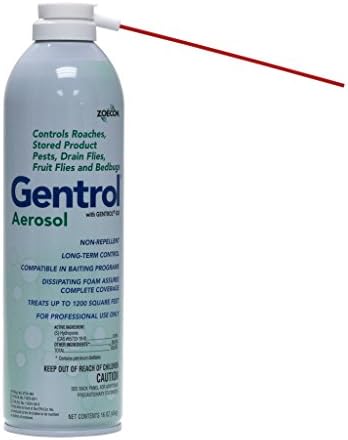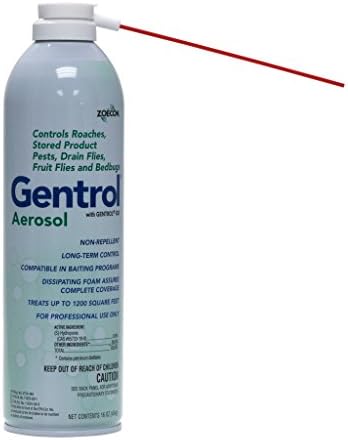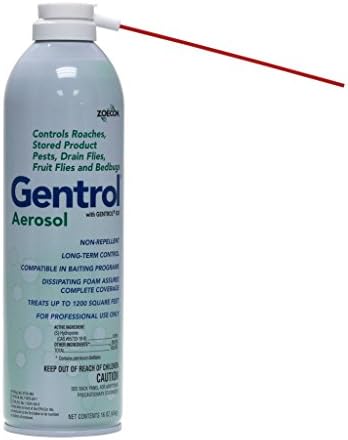
AerosolGentrol Aerosol, 16 oz canA visible foam brings our hydroprene growth regulator into cabinet voids and wall gaps where young roaches hide before their final molt.★ 4.5 out of 5
$24.30

Gentrol Aerosol goes on as a foam you can see, and that is a design decision, not a side effect. A clear spray leaves you guessing about coverage. The foam sits white on the seam for a moment, shows exactly what got treated and what got skipped, then dissipates without leaving a heavy film behind.
Missed spots are the way crack and crevice work fails, so an applicator that shows its own gaps is doing half the inspection for you.
The extension tube turns the can from a surface sprayer into a precision tool. Seat it in the valve, put the tip into the crack, and the foam travels into the void instead of across the face of it. The active ends up where the nymphs actually are, behind the seam rather than on it.
Work in short bursts. The foam expands after it lands, and a seam that looks half filled at the tip is usually full a second later.
The productive seams in a kitchen repeat from job to job: the gap where the baseboard meets the floor, the seam behind the stove where the counter dies into the wall, plumbing penetrations under every sink, the hinge side of cabinet frames, and the dark joint under the lip of the counter.
Behind and under appliances is its own category. The warm void behind a refrigerator motor is prime harborage, and the tube reaches it without pulling the appliance all the way out.
With the tube off, the can works as a general surface and spot sprayer. Hold it ten to twelve inches from the surface and move with a sweeping motion, the way the label describes. The foam lays down an even band that reaches into texture a wipe-on never would.
Shake the can well first. The active rides in the propellant blend, and the shake is what keeps the rate even from the first burst to the last.
One 16 oz can covers about 1,200 square feet of application. In practice a single kitchen uses far less, which is why the can, the two pack and the six can case exist as separate listings rather than one size.
A homeowner treating one room buys the single can and stores the rest for the follow-up. A tech running accounts burns through the case, and the case price is built for that arithmetic.
The rest of the guide covers the other formulations and the rooms they were written for.