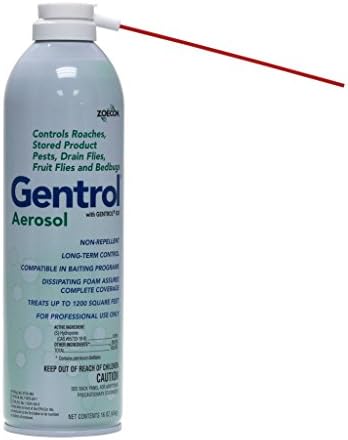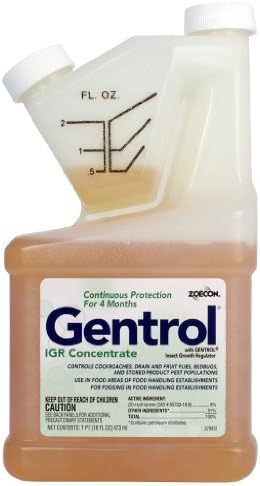
IGR ConcentrateGentrol IGR Concentrate, 1 pint (16 oz)Mix this concentrate into your pump sprayer to keep immature roaches, pantry pests, and drain flies from molting into breeding adults across large spaces.★ 4.6 out of 5
$84.99

Gentrol carries a working life of up to 120 days after application. Laid into a crack or a void, the hydroprene keeps meeting the nymphs that pass through for around four months, which is longer than most materials in the rotation.
The figure describes the material in place, in the dark, out of the weather. A treated seam behind a stove holds its rate. A surface that gets scrubbed with degreaser twice a day does not, and no number on a can survives a mop.
The residual is four months of interrupted development, not four months of empty glue boards starting day one. Through that window, immatures contacting the treated harborage keep molting wrong and keep failing to become breeders.
That distinction matters for expectations. The 120 days is the engine running in the background. The visible results follow the generation math, and the generation math has its own clock.
A German cockroach goes from egg case to breeding adult in roughly two months when conditions are good. Put the regulator down today and the population running the room is untouched, but its replacement class is finished. The visible decline lands as the standing adults age out.
This is why the residual is longer than the life cycle on purpose. One application stands across more than one generation of attempts, and the second generation walks into the same wall the first one did.
On a scheduled account, reapplication lands inside the 120 day window rather than at its edge, so there is never an uncovered month. Quarterly service maps onto the residual almost exactly, which is not a coincidence in how the line is built.
For a homeowner, the honest advice is simpler: treat, wait out the generation, and mark the calendar around three months to walk the room again with a flashlight before deciding anything.
Quiet is data only if something is listening. A few glue monitors left in the old hot spots turn the question of whether the room is clear into a count instead of an impression.
Boards that stay empty through the back half of the residual window are the actual finish line. That is the point where the program moves from treatment to habit, and the habit is what keeps the account boring.
The rest of the guide covers the other formulations and the rooms they were written for.